Osteopath for babies and infants in Netanya
The first months of life can leave tension in a newborn: pregnancy, a long delivery, forceps or ventouse, position in the womb… Pediatric osteopathy uses very gentle techniques to help your baby regain comfort and mobility. In Netanya, Jonathan Jaoui, D.O. osteopath, welcomes infants at the clinic.
Book an appointment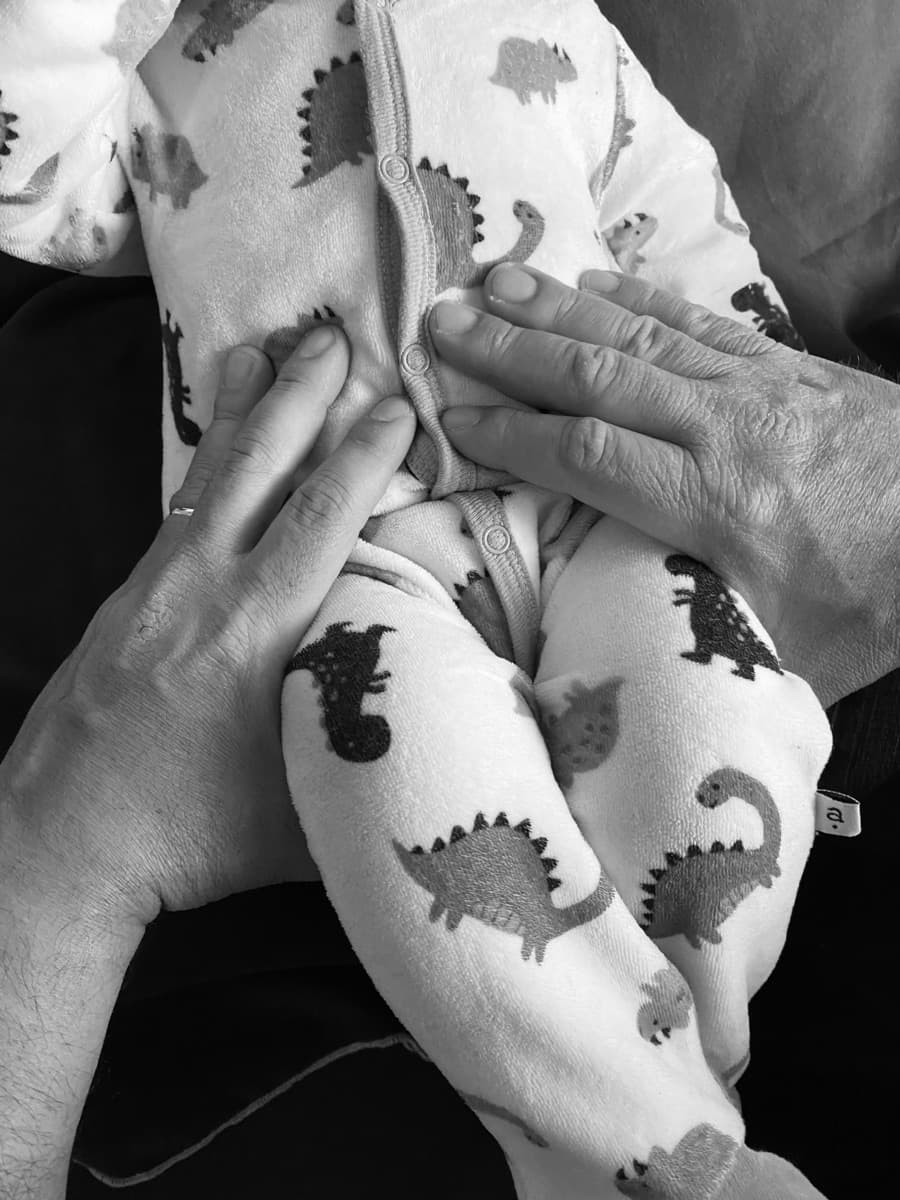
Reasons to consult for an infant
Infant torticollis, head always turned to one side
Infant torticollis shows as the head often tilted or always turned to the same side, sometimes with difficulty turning it the other way. It can be linked to the position in the womb or a long or instrumental delivery. Left unaddressed, it can encourage a flat spot on the resting side. With very gentle mobilizations of the neck, skull and upper back, the osteopath helps restore freedom of movement to the neck, alongside positioning advice and, if needed, the physiotherapy prescribed by your doctor.
Flat head (plagiocephaly)
Plagiocephaly is a flattening of one area of the skull, encouraged by lying on the back (recommended for sleep) and often linked to a torticollis that keeps the head resting on the same side. As a baby's skull is very mouldable in the first months, early care is the most effective. The osteopath works gently on the mobility of the skull and neck to release what keeps the pressure asymmetric, and supports you with simple day-to-day positioning advice. Significant cases also warrant a medical opinion.
Colic, bloating and digestive discomfort
Infant colic — intense crying, legs drawn up, a tense tummy, often at the end of the day — is common and harmless, but exhausting for the whole family. A baby's digestive system is still immature. With very gentle, external techniques on the tummy, diaphragm and back, the osteopath aims to release the tension that can add to the discomfort and to improve digestive comfort. This work is always alongside your pediatrician's follow-up, whom you should see if anything unusual appears.
Reflux and regurgitation
Small amounts of spitting up after feeds are normal in a baby whose digestive system is immature. When frequent or linked to discomfort, tension in the diaphragm, stomach or back can play a part. The osteopath works gently on these areas to improve the baby's comfort, alongside positioning advice (holding upright after the feed) and your pediatrician's follow-up. Significant reflux, a drop in the weight curve or a baby refusing to feed need a medical opinion first.
Sleep problems and restlessness
A baby who sleeps poorly, struggles to fall asleep or often seems unsettled may be bothered by physical tension — neck, skull, back — sometimes carried over from pregnancy or birth, or kept up by digestive discomfort. By releasing this tension with very gentle movements, osteopathy can help the baby relax and find more peaceful sleep. It is not a sleep treatment as such, but support for the child's overall comfort, alongside your usual follow-up.
Sucking or breastfeeding difficulties
Some babies feed on one side only, latch poorly, tire quickly or swallow a lot of air. Tension in the jaw, skull or neck — sometimes linked to the birth — can hinder sucking. The osteopath works gently on these areas to restore ease to sucking and swallowing movements, together with the advice of your midwife or lactation consultant. A tongue-tie or a persistent difficulty also warrants a specialist medical opinion.
After a difficult birth (forceps, ventouse, C-section)
A long, fast, instrumental (forceps, ventouse) or C-section birth can leave tension in the newborn's body, particularly in the skull, neck and back. This tension is harmless but can contribute to torticollis, digestive discomfort or restlessness. A consultation in the first weeks allows, with a very gentle touch, to support the baby in adapting to their new life and to release what may have become stuck during birth.
A gentle, safe approach
For babies there is no forced manipulation: the work uses very light pressure and gentle, painless mobilizations. Each session begins with a conversation about the pregnancy, the birth and your child's daily life, followed by a careful examination.
When to consult?
It is never too early. A consultation in the first weeks is often beneficial, but osteopathy can help at any stage of early childhood. If in doubt, talk to your pediatrician.
How does a session work?
A session lasts about 30 minutes (flat rate: 150 ₪). Your baby stays dressed as much as possible and can be comforted at any time. The movements are gentle and respect your baby's rhythm.
Osteopathy does not replace medical care — it complements it.
A tip before the session: avoid feeding your baby (breast or bottle) in the hour and a half before the appointment. This limits reflux and spitting up during treatment — ideally, feed just after rather than before.
Related treatments
Frequently asked questions
From what age can we come?
From the very first days of life, with techniques suited to newborns.
Is it painful or risky for my baby?
No. The techniques are very gentle, painless and involve no forced manipulation.
How many sessions are needed?
Usually one to three, depending on the issue and the child's age.
Do I need a referral?
No, you can book directly.