Osteopath for stress, posture and sleep in Netanya
Stress and poor posture settle into the body: tight neck and shoulders, a stiff back, restricted breathing, disturbed sleep. Osteopathy helps release this tension and restore better balance. In Netanya, Jonathan Jaoui, D.O. osteopath, supports these problems at the clinic.
Book an appointment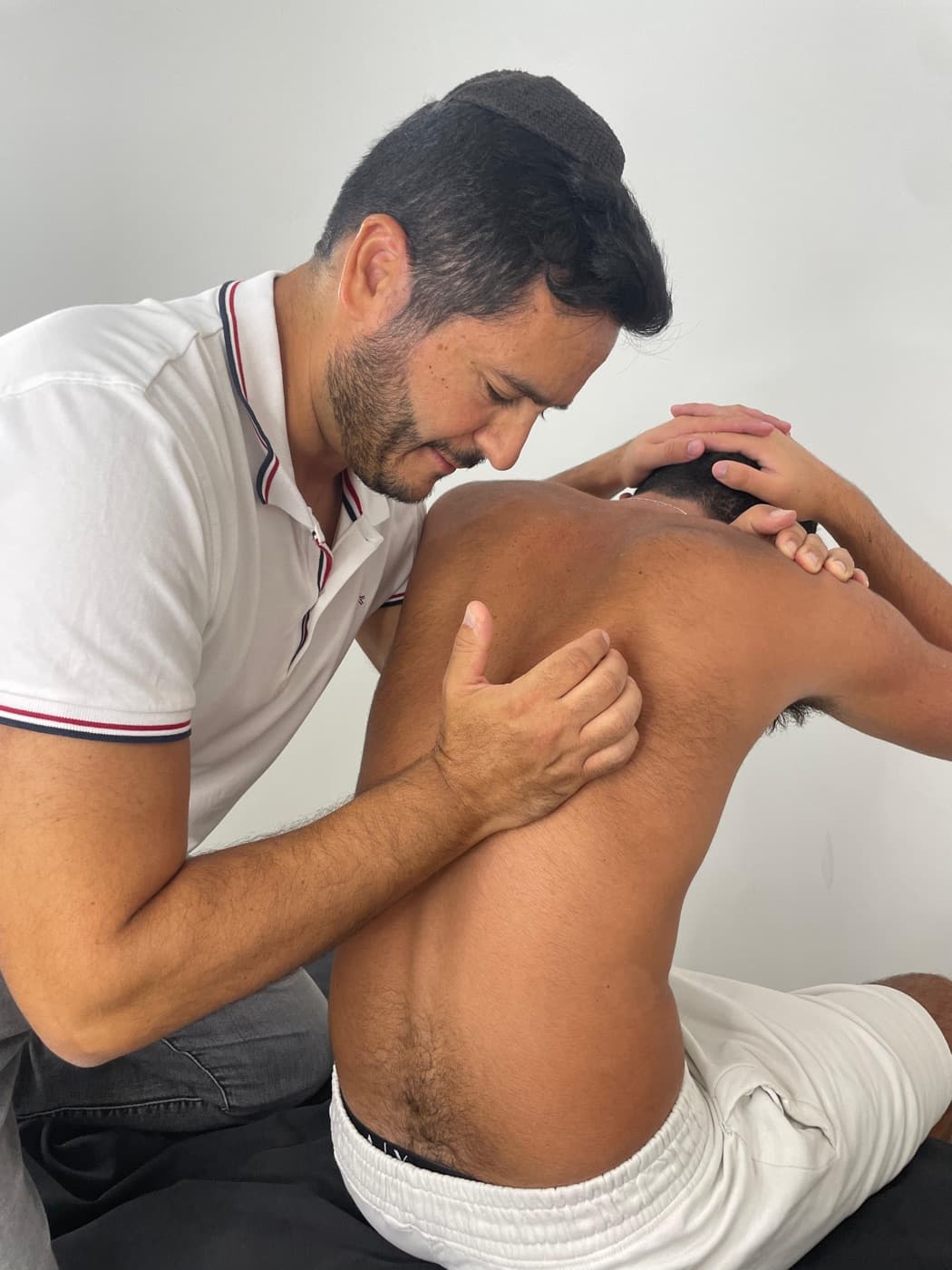
Reasons to consult
Neck and shoulder tension
The neck and shoulders are the first places where stress and tension settle. They tighten, become painful and limit movement. The osteopath releases this tension with gentle techniques and takes posture and breathing into account, for lasting relief.
Stiff back and postural pain
A stiff back and postural pain appear with sustained positions and accumulated stress. The muscles constantly compensate and tire. The osteopath restores the back's mobility and releases tension, with everyday movement and ergonomics advice.
Tightness in the chest and shallow breathing
A feeling of tightness or shallow breathing often comes with stress: the diaphragm and rib cage lock up. The osteopath works on the mobility of the ribs, diaphragm and upper back to bring fullness back to the breath and ease this feeling.
Sleep problems and trouble falling asleep
Stress disrupts sleep: trouble falling asleep, restless nights. By releasing the body's physical tension, osteopathy promotes relaxation and can help you find more peaceful sleep. It is not a sleep treatment, but support for overall comfort.
Jaw tension (bruxism)
Bruxism — clenching or grinding the teeth, often at night and under stress — creates tension in the jaw, skull and neck. The osteopath works gently on these areas to release the tension and reduce its impact (headaches, jaw pain).
Fatigue and irritability from stress
Chronic stress also shows as fatigue, irritability and a feeling of constant tension. Osteopathy acts on the physical effects of stress to help the body let go, alongside medical or psychological support if needed.
Poor posture (desk, screen)
Poor posture — rounded shoulders, a hunched back at the screen — gradually settles into the body and keeps tension and pain going. The osteopath releases this tension and helps you regain a more balanced posture, with simple ergonomics and mobility advice.
A whole-body approach
By releasing physical tension in the back, neck, diaphragm and jaw, osteopathy helps the body regain flexibility and better cope with the effects of stress. Posture and breathing are central to the work.
When to consult?
When stress-related tension becomes bothersome or persistent. Osteopathy does not replace psychological or medical care when that is needed.
How a session works
About 45 minutes: a review of your daily life and tension, a postural exam, gentle treatment, then breathing, stretching and ergonomics advice.
Osteopathy works on physical tension; it complements, without replacing, medical or psychological care.
Related treatments
Frequently asked questions
Does osteopathy help with sleep?
By releasing physical tension, it can promote relaxation and better sleep.
Can it help manage stress?
It works on the physical effects of stress; it complements, without replacing, other support.
How many sessions?
A few sessions are often suggested depending on the tension.
Do I need a referral?
No, you can book directly.