Osteopath for back pain in Netanya
Almost everyone gets back pain at some point: long hours sitting, an awkward movement, stress, lifting… An osteopath looks for the real source of the pain — not just where you feel it — for lasting relief. In Netanya, Jonathan Jaoui, D.O. osteopath, treats lower-back pain, mid-back pain and sciatica at the clinic.
Book an appointment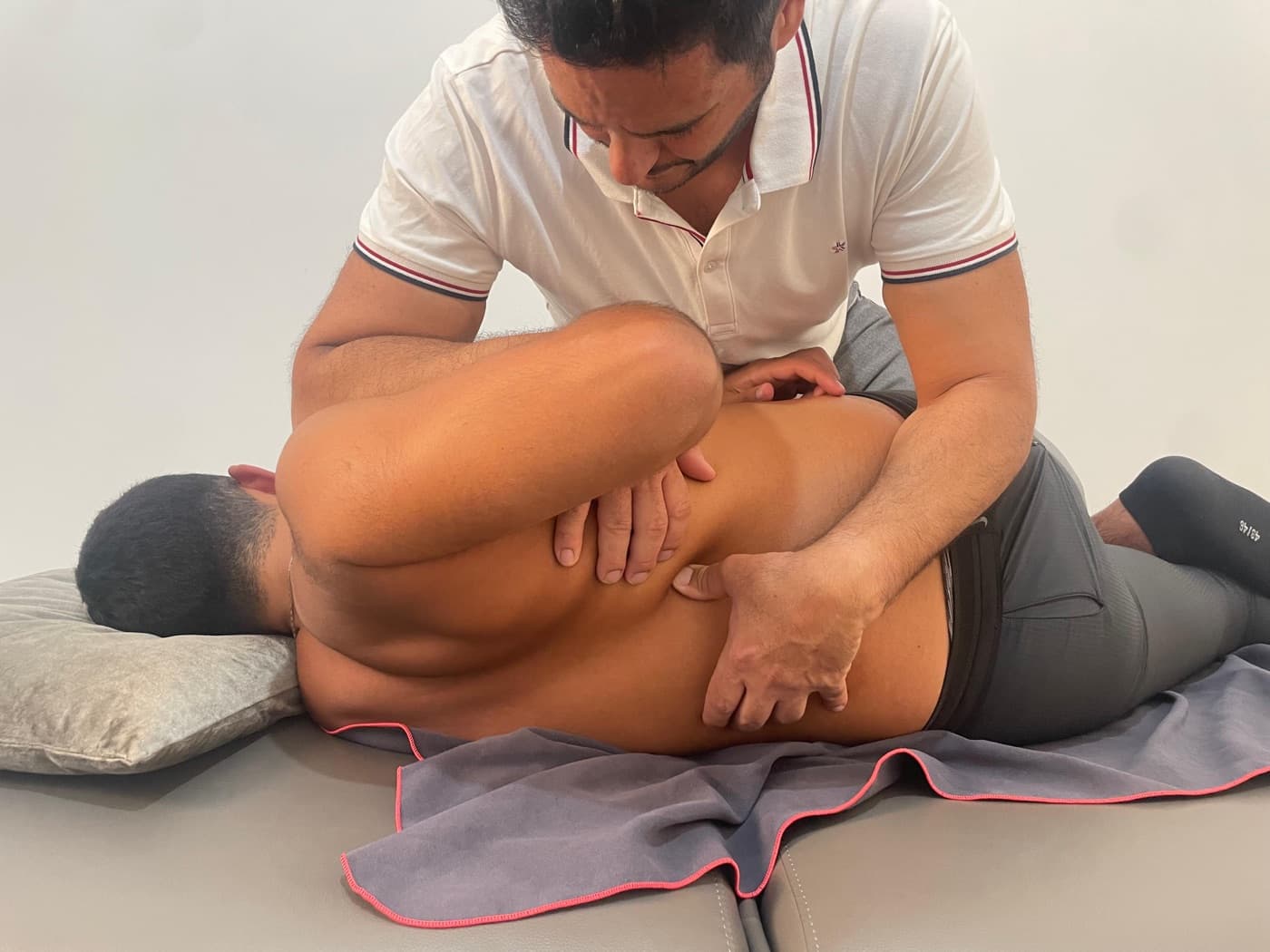
What we treat
Lower back pain, acute or chronic
Lower back pain is the most common reason for consulting. It can come on suddenly (an awkward movement, lifting) or build up over time (sitting, stress, lack of activity). The osteopath looks for the real source of the pain — the mobility of the lumbar vertebrae, the pelvis, muscle tension — and works to restore mobility and relieve it, from gentle techniques to precise manipulation depending on your comfort.
Mid- and upper-back pain
Mid-back pain affects the upper and middle back, often between the shoulder blades. Common in people who are stressed or hunched over a screen, it is kept up by tension in the muscles, ribs and posture. By working on the mobility of the mid-back vertebrae, ribs and shoulders, the osteopath releases this tension and brings ease back to the back and breathing.
Sciatica
Sciatica (pain running down the back of the leg) and cruralgia (down the front) reflect an irritated nerve, often in the lower back. Muscle tension (piriformis, psoas) and pelvic imbalance can play a part. The osteopath works gently on lumbar mobility, the pelvis and the muscles involved to relieve the nerve. Severe pain or a loss of strength or sensation needs a medical opinion first.
Lumbago (sudden lower-back seizure)
Lumbago — a sudden 'locked' lower back — is an acute, painful block often triggered by an ordinary movement. Alarming but usually harmless, it corresponds to a protective muscle spasm. The osteopath helps release this block gently, relax the muscles and restore mobility, to shorten the episode and stop it settling in.
Pain related to a disc problem
A herniated disc can compress or irritate a nerve and cause back and leg pain. Osteopathy does not 'repair' the disc, but can relieve symptoms by working on the tension and mobility around the area, to reduce the strain on the nerve. This work is always alongside medical care, which is essential in case of loss of strength, bladder problems or severe pain.
Stiffness and a 'locked' back
A stiff, 'locked' or 'cracking' back often reflects a loss of mobility in certain vertebrae and compensating muscle tension. Harmless, but it hampers everyday movement. The osteopath identifies the areas involved and restores mobility with gentle mobilizations and, when indicated, precise manipulation, to free up the back.
Postural pain (desk, driving)
Postural pain appears with sustained positions: desk, screen, long drives. The back and neck constantly compensate, which creates tension and fatigue. The osteopath releases this tension and gives you ergonomics and movement advice, since alternating positions and moving remain the best remedy.
A whole-body approach
After a full assessment (history, mobility tests, postural exam), treatment combines gentle techniques, mobilizations and, when needed, precise manipulation. The goal: release tension, restore mobility and rebalance the whole body.
When to consult?
As soon as pain appears, or preventively if it keeps coming back. With severe pain, fever, loss of strength or bladder problems, see a doctor first.
How a session works
A session lasts about 45 minutes: a conversation about your history and lifestyle, examination, tailored treatment, then exercise and posture advice to extend the benefits.
Osteopathy complements your usual medical care — it does not replace it.
Read also
Related treatments
Frequently asked questions
How many sessions for back pain?
Often one to three are enough. Chronic cases may need spaced-out follow-up.
Does osteopathy relieve sciatica?
Yes, by working on the tension and mobility that irritate the nerve; a medical opinion is useful if pain is severe.
Are manipulations painful?
No. Techniques are adapted to each person, from the gentlest to precise manipulation, always within your comfort.
Do I need a referral?
No, you can book directly.